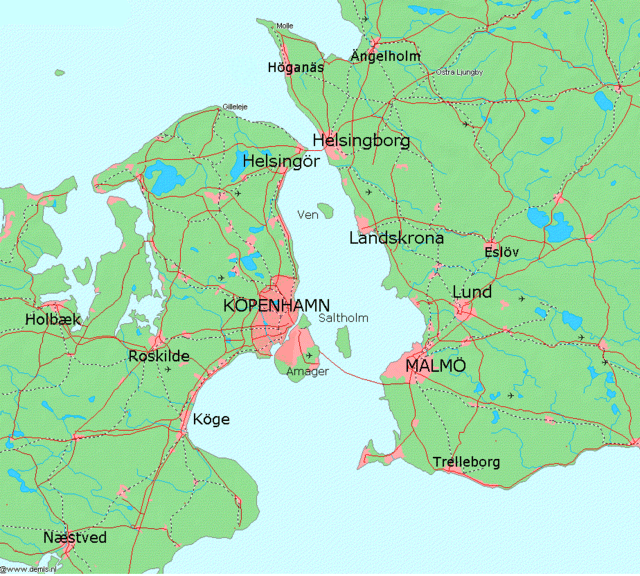
The Sound Toll Register is a valuable source of information on trade patterns in the Baltic region from 1497 to 1857. It is a detailed record of the tolls collected on goods passing through the Danish-controlled Sound, a narrow strait that connects the Baltic Sea to the North Sea. The register provides information on the types and quantities of goods being traded, as well as the origins and destinations of the ships carrying them. This data allows researchers to gain insight into the economic activity and trade patterns of the region during this time period. The Sound Toll Register has been used by historians and economists to study a wide range of topics, including the grain trade, the development of global trade networks, and the role of Denmark in regional and international commerce.
Through a careful examination of the Sound Toll data, I have discovered some new and surprising findings that challenge previous interpretations of the grain trade in this period. On January 12th I will be presenting these findings online at the Financial History Network (GIRO) workshop in Mannheim in a paper entitled “A quantitative analysis of the English and Baltic grain trade”.
The department of economic history in Mannheim will host the GIRO workshop in 2023. Mannheim is a city in the state of Baden-Württemberg in southwestern Germany. It is the third-largest city in the state, with a population of around 317,000 people. Located on the banks of the River Neckar, Mannheim is known for its vibrant cultural scene, with a wide range of museums, galleries, theatres, and music venues. The city is also home to a number of universities and research institutes, making it an important centre of higher education and research.
One of the key findings of my research is that the Baltic grain trade did not break down in the 18th century, as has often been assumed. Instead, the Baltics continued to export significant amounts of rye, even as England’s exports of wheat increased. This suggests that the success of the English grain trade at this time was not necessarily tied to the decline of the Baltic trade, as has been previously suggested.
This new interpretation offers a more nuanced and complex view of the dynamics of the grain trade in this period, and challenges assumptions that have been widely accepted in the field. I argue for instance, that the success of the English grain trade can be explained by market positioning rather than solely by the Corn Bounty Act of 1672, as has been previously suggested. By this piece of legislation, Parliament granted bounties on corn exports, if prices would fall under certain benchmarks. It was therefore obvious to assume, that government subsidies were responsible for England’s success on the northern European corn market.
The paper also contributes to discussions of the effects of the growing commercialization of food, and especially grain, for English society and whether this process came into conflict with the politics of provision, that is the ways in which governments and other authorities manage and regulate the production, distribution, and consumption of food within a society.
Ensuring an adequate and reliable food supply is a crucial aspect of any society, as access to food is essential for human survival and well-being. Governments and other authorities must therefore take steps to ensure that the food needs of their citizens are met, either through domestic production or through trade with other countries. The politics of provision can be influenced by a range of factors, including economic considerations, environmental concerns, and social and cultural values. The way in which a society manages its food supply can have significant consequences for its citizens and for its place in the global economy.
I am excited to present these findings at the GIRO workshop in Mannheim and to engage in discussions with others working on topics related to Medieval Finance. I welcome everyone who is interested in this topic to join me at the workshop and learn more about my research and the broader field of Medieval Finance.
For information on the workshop and how to sign up, click here.
Matthias Berlandi
 The Politics of the English Grain Trade, 1314-1815